


Lithium Battery Shipments in 2026: Your Quick-Start Guide to IATA's New Rules (Miami Air Freight Edition)
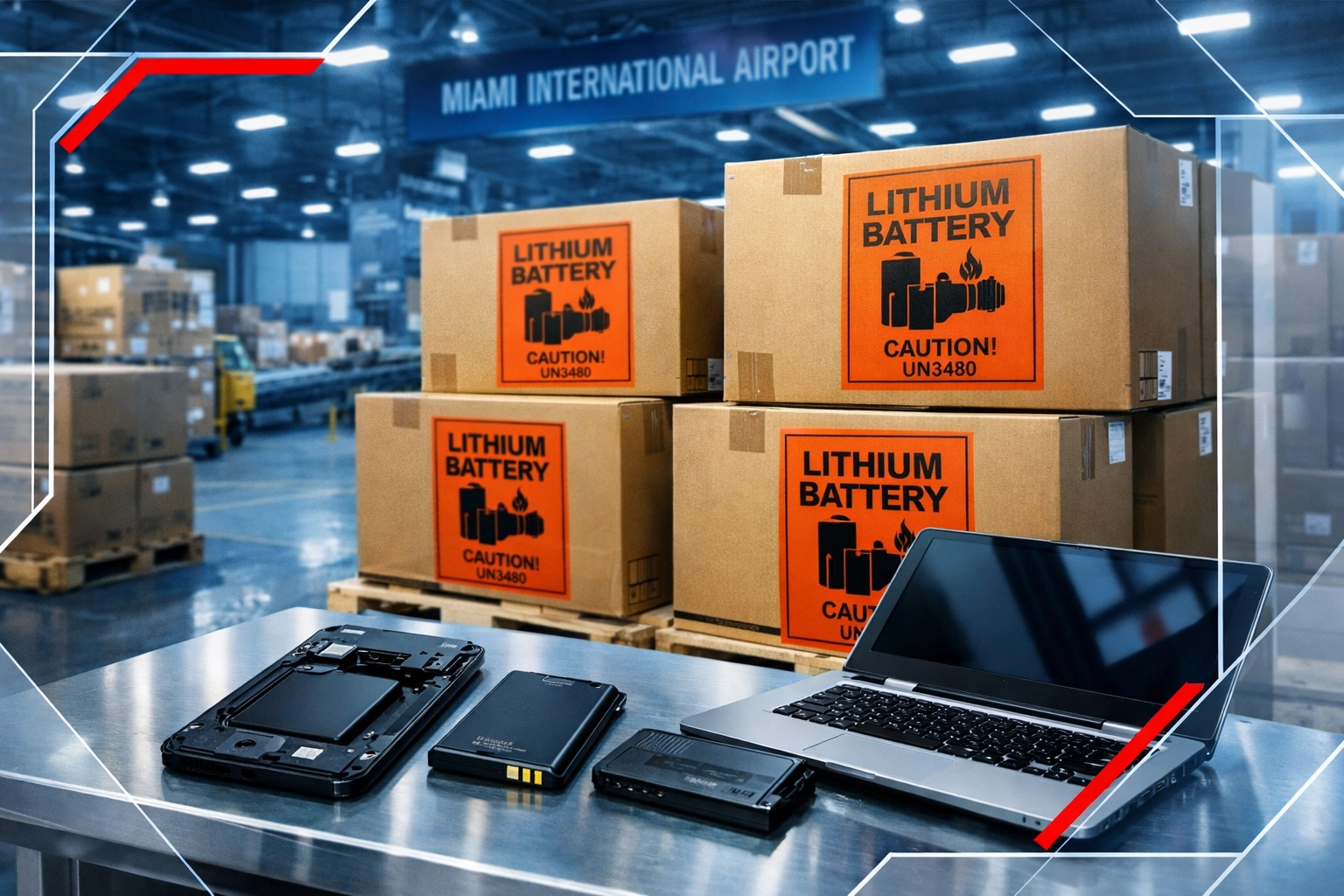
Lithium batteries power the modern world. From smartphones and laptops to e-scooters and power tools, these energy-dense power sources are embedded in nearly every product category flowing through global supply chains. As Miami continues to solidify its position as a gateway for international trade: particularly for Latin American commerce and high-value electronics: the rules governing lithium battery air freight have become significantly more stringent.
If your business ships lithium batteries or battery-powered products through Miami International Airport, 2026 marks a critical regulatory turning point. The International Air Transport Association (IATA) has implemented mandatory state of charge (SoC) requirements that now extend far beyond standalone battery shipments. These changes affect manufacturers, retailers, distributors, and any logistics miami operation handling devices with built-in or accompanying lithium batteries.
Understanding these regulations isn't just about compliance: it's about maintaining the speed and reliability your customers expect while avoiding costly delays, rejections, or penalties at the cargo terminal.
What Changed on January 1, 2026
The centerpiece of IATA's 67th Edition Dangerous Goods Regulations is straightforward but far-reaching: lithium batteries must now be shipped at 30% state of charge or lower for most air freight scenarios.
This requirement isn't entirely new for standalone batteries classified under UN3480, which have been subject to the 30% limit for years. What changed is the expansion of this mandate to batteries packed with equipment (UN3481 under Packing Instruction 966) and battery-powered vehicles exceeding 100 watt-hours (UN3556 under Packing Instruction 952).
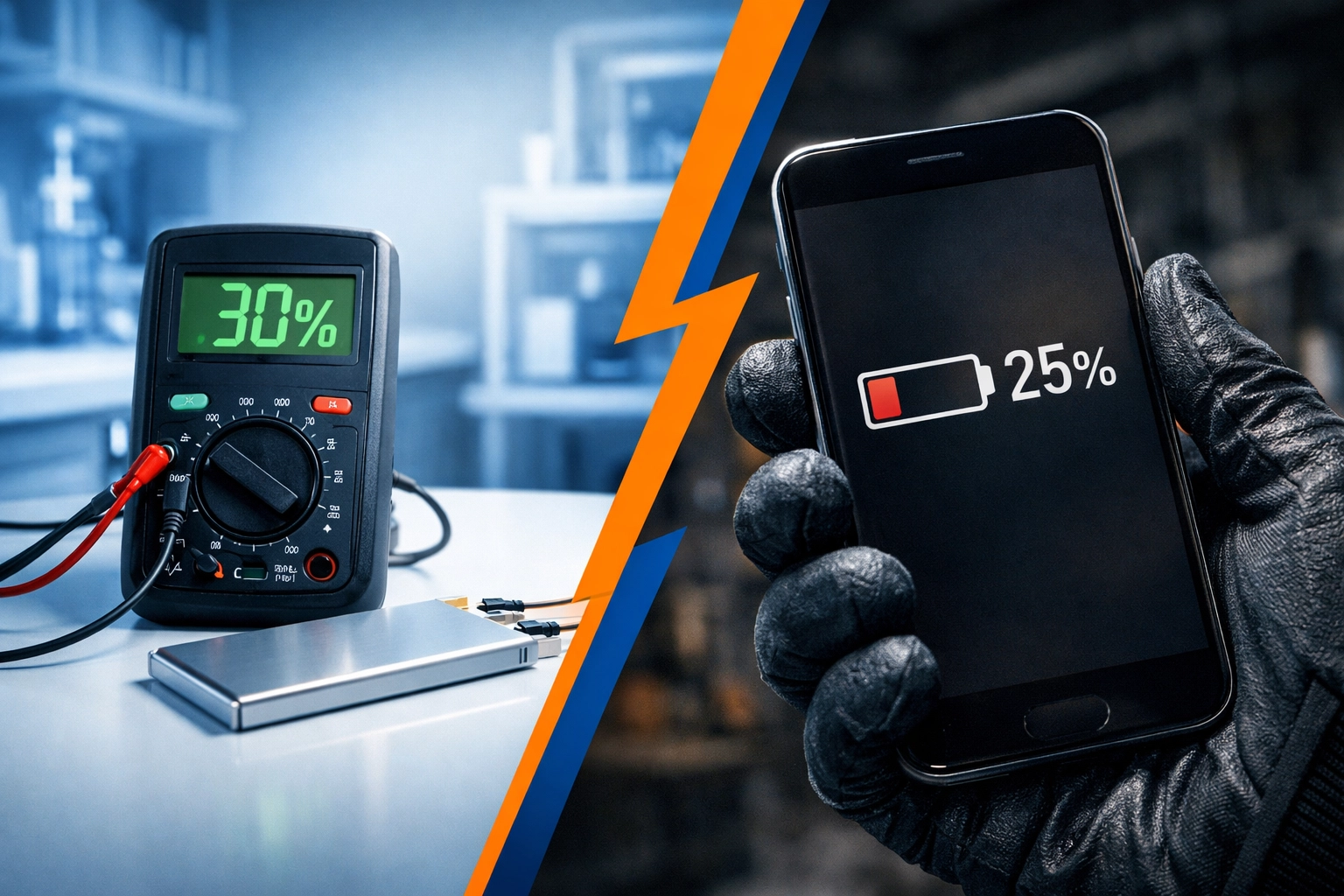
In practical terms, if you're shipping a laptop alongside its lithium-ion battery, or a commercial-grade power drill with a battery pack rated above 2.7 watt-hours, that battery must now be charged to no more than 30% of its design capacity before air transport. Alternatively, you can demonstrate the battery shows no more than 25% charge on its display indicator.
For Miami-based operations managing high volumes of electronics, consumer goods, or industrial equipment, this represents a significant operational shift. The rule now captures the vast majority of commercial battery shipments that previously fell outside mandatory SoC limits.
Who Must Comply in Miami's Air Freight Ecosystem
Every party in the air freight supply chain bears responsibility for lithium battery compliance:
Manufacturers and distributors preparing products for air shipment must ensure batteries are at appropriate charge levels before handing off to freight forwarders. Retailers and e-commerce fulfillment operations using Miami as a distribution hub must verify battery status for outbound international shipments. Freight forwarders in Miami like Rule Logistics carry the critical responsibility of verifying documentation, ensuring proper classification, and coordinating with airlines that have their own additional restrictions.
The regulatory burden doesn't disappear simply because your business didn't manufacture the battery. Once you offer a shipment containing lithium batteries to an air carrier, you become legally responsible for ensuring that shipment meets all applicable dangerous goods requirements.
Categories of Products Now Under Mandatory Compliance
The 2026 changes significantly broaden the scope of affected products. Here's what now falls under mandatory 30% SoC limits:
Electronics Packed With Batteries: Smartphones, tablets, laptops, digital cameras, portable speakers, and similar devices shipped with separate or installed batteries exceeding 2.7 watt-hours now require documented proof of 30% charge or less.
Power Tools and Industrial Equipment: Cordless drills, impact drivers, robotic vacuum cleaners, professional-grade power tools, and battery-operated industrial devices with cells or batteries above 2.7 Wh.
Battery-Powered Vehicles: E-scooters, hoverboards, electric skateboards, and small electric vehicles with battery capacity greater than 100 watt-hours face mandatory SoC limits for the first time.
Power Banks and Portable Chargers: High-capacity external battery packs, particularly those exceeding 100 watt-hours, continue under strict regulation.
Smaller batteries at or below 2.7 watt-hours, and battery-powered vehicles with 100 Wh or less capacity, currently have SoC compliance as a recommendation rather than a mandate: but best practice suggests treating all lithium shipments with the same rigor given how quickly regulations evolve.
What 30% State of Charge Actually Means
State of charge refers to the current energy level of a battery relative to its full rated design capacity. A battery with 3,000 milliamp-hour (mAh) capacity at 30% SoC would contain roughly 900 mAh of actual charge.
For shippers, this creates two practical measurement options:
Technical Measurement: Use battery management systems or testing equipment to verify actual charge percentage against rated capacity. This method provides definitive compliance proof but requires technical capability and documentation.
Display Indicator Method: Demonstrate the battery's visual display shows 25% or less remaining charge. This user-friendly alternative works for consumer electronics with built-in displays but requires photographic or written evidence.
Both methods are acceptable under current IATA regulations, but your freight forwarder in Miami will need clear documentation regardless of which approach you use.
The Exception Process: When You Need Higher Charge Levels
Some shipments legitimately require batteries above 30% charge: prototype testing, demonstration units, or specific customer requirements might necessitate higher SoC. IATA does provide an exception pathway through Special Provision A331, but it's not a simple checkbox.
Exceeding 30% SoC requires advance approval from two separate regulatory authorities: the State of Origin (where the shipment begins) and the State of the Operator (the airline's regulatory jurisdiction). This dual-approval process typically adds weeks to shipping timelines and involves substantial documentation justifying why the higher charge level is necessary.
For time-sensitive shipments or regular commercial flows, the administrative burden and delay make the exception process impractical for most Miami logistics operations. The more strategic approach involves adjusting your supply chain processes to accommodate the 30% requirement as standard practice.
Documentation and Classification Requirements
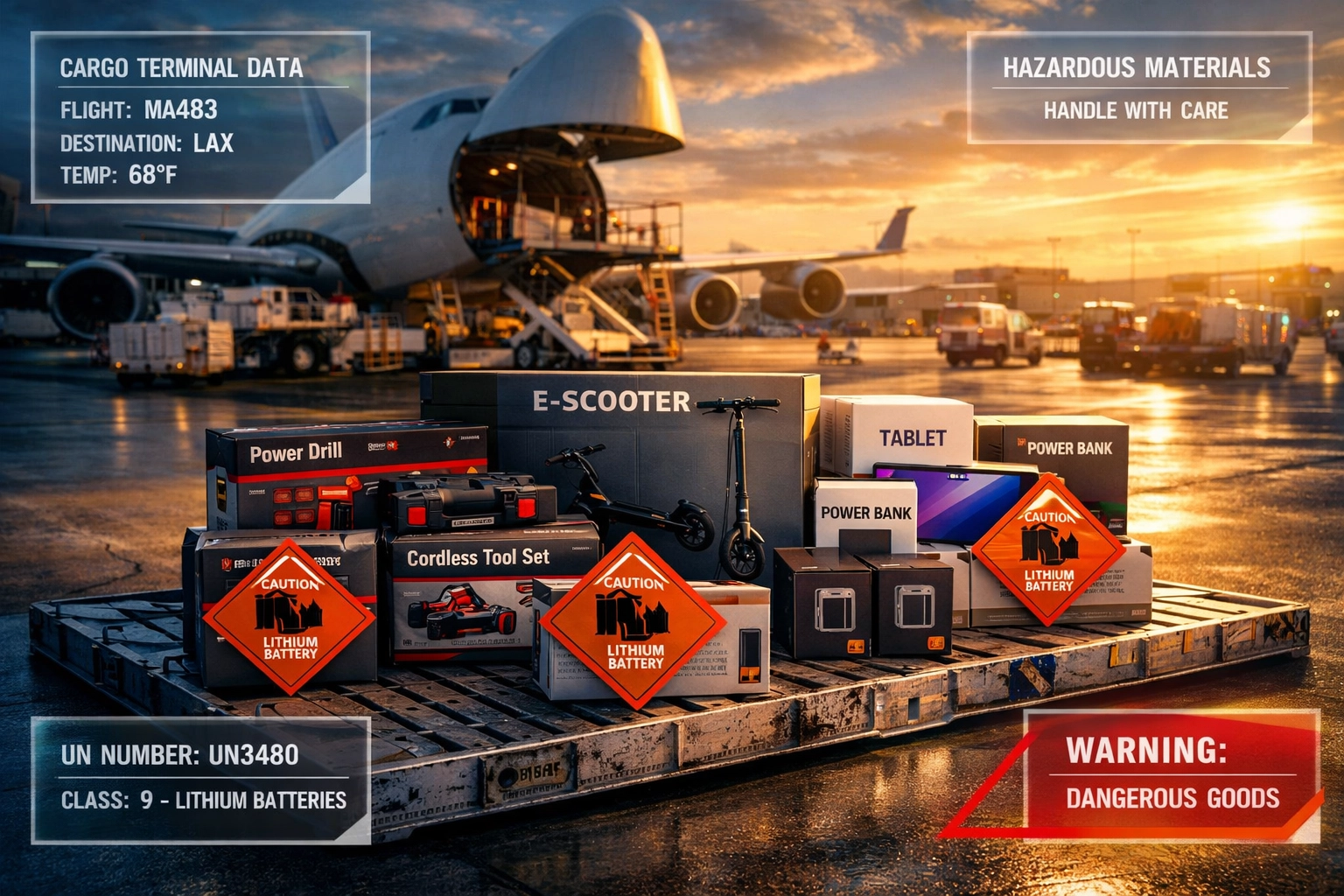
Proper dangerous goods documentation separates smooth air freight operations from terminal rejections and compliance violations. Lithium battery shipments require precise UN classification based on battery type and packaging:
UN3480 (Packing Instruction 965): Lithium-ion or lithium metal batteries shipped alone, not installed in or packed with equipment.
UN3481 (Packing Instructions 966/967): Lithium batteries packed with equipment (PI966) or contained in equipment (PI967).
UN3556 (Packing Instruction 952): Battery-powered vehicles or equipment powered by lithium batteries.
Each classification carries specific labeling, packaging, and documentation requirements. The Shipper's Declaration for Dangerous Goods must include battery specifications, SoC confirmation, watt-hour ratings, and proper emergency response information.
Airlines operating through Miami International Airport often impose additional restrictions beyond IATA baseline requirements. Some carriers prohibit certain UN classifications entirely on passenger aircraft, while others set lower watt-hour thresholds or require advance notification for high-capacity shipments.
Navigating this regulatory landscape requires current knowledge of IATA rules, U.S. Department of Transportation regulations, airline-specific policies, and destination country requirements: a complex matrix that changes frequently.
How Rule Logistics Takes the Stress Out of Dangerous Goods Compliance
This is where specialized expertise in dangerous goods handling becomes invaluable. Rule Logistics brings certified dangerous goods professionals and systematic compliance processes to every lithium battery shipment moving through our Miami operations.
Pre-Shipment Consultation: Our team evaluates your products, battery specifications, and destination requirements before you tender cargo. We identify the correct UN classification, determine applicable SoC requirements, and advise on any product modifications needed for compliant air transport.
Documentation Management: Rule Logistics prepares complete dangerous goods documentation including Shipper's Declarations, proper labeling, and airline-specific supplementary paperwork. We maintain current knowledge of carrier policies and route restrictions to avoid rejections.
Carrier Coordination: We work directly with airlines to secure approval for your shipments, communicate special handling requirements, and ensure your cargo meets carrier-specific standards beyond IATA baseline rules.
SoC Verification Support: Our processes include verification checkpoints for state of charge documentation, helping you establish proper measurement and recordkeeping procedures that satisfy regulatory scrutiny.
Ongoing Compliance Updates: Dangerous goods regulations evolve constantly. Rule Logistics monitors IATA updates, U.S. regulatory changes, and airline policy modifications to keep your operations ahead of new requirements rather than scrambling to catch up.
For businesses using a 3PL in Florida, integrating dangerous goods compliance into your broader logistics miami strategy prevents the operational fragmentation that occurs when using separate providers for freight forwarding, warehousing, and dangerous goods handling. Rule Logistics provides comprehensive oversight across your entire supply chain, ensuring lithium battery compliance doesn't create bottlenecks in your Miami air freight operations.
Moving Forward With Confidence
The 2026 IATA lithium battery regulations represent a maturation of air transport safety standards in response to real-world incidents and evolving battery technology. While the expanded scope of mandatory SoC requirements creates new compliance obligations, it also levels the competitive playing field by establishing consistent standards across the industry.
Your ability to adapt quickly to these requirements directly impacts your operational efficiency and customer satisfaction. Delays at the cargo terminal, rejected shipments, or compliance violations create cascading problems: disappointed customers, damaged business relationships, and potential regulatory penalties.
Working with a freight forwarder in Miami that specializes in dangerous goods handling transforms regulatory complexity into operational simplicity. Rule Logistics handles the technical compliance details so you can focus on growing your business rather than deciphering IATA packing instructions.
Whether you're shipping consumer electronics, industrial equipment, or battery-powered devices through Miami International Airport, our team ensures your cargo moves safely, legally, and efficiently through the air freight system.
Ready to simplify your lithium battery air freight operations? Contact Rule Logistics at info@rule-logistics.com to discuss your specific shipping requirements and discover how our dangerous goods expertise keeps your Miami logistics running smoothly in 2026 and beyond.
Comments